STRANGER THINGS MEGA SPOILERS AHEAD
So I finally got to see the finale of Stranger Things. You know me, I like to come late to the game. The trick is avoiding spoilers. But there seems to be some disquiet about its conclusion, and I don’t know why. Something called “conformity gate“. I don’t think this refers to a gate to the Upside Down, but the traditional suffix for controversy (like “Watergate”).

This meme refers to the disappointment some viewers had that, in the epilogue, all the main characters went on to lives that matched their goals or character arcs. They “conformed” to the roles expected of them. It was perfect. Too perfect. So they believe there’s a secret ninth episode to come that will reveal the epilogue to be a vision of Vecna’s, which he’s forcing onto the Party. Sort of a cruel twist finale a la Brazil or Black Mirror. Their evidence for this is based on (checks notes) the arrangement of books on the shelf, some continuity errors regarding color, and where the characters are sitting at graduation.
Well, sorry the ending to your ten-year, forty-five-hour epic was too happy.
People are comparing it to Game of Thrones. They’re not even close. GoT was bad because it was rushed, sloppy, and ignored good writing rules. Why was Arya the one who killed the Night King when he was Jon Snow’s enemy? Why does Jamie Lannister suddenly go back to Cersei when he was gravitating toward Brienne for the past four seasons? Why did Daenerys go scorched earth on King’s Landing when she’s demonstrated good judgment for all 7 seasons? These characters were acting contrary to their characterizations (i.e., OOC). But that’s not what Stranger Things did.
These characters naturally evolved into their destinies. Nancy becomes a journalist. Jonathan becomes a filmmaker. Steve becomes a caretaker of children. Max and Lucas end up together. Dustin goes to college. Will finds solace in his self-actualization, no longer beholden to his secrets. And Mike becomes a writer (very Bill Denborough from Stephen King’s It).
Now, do I think it’s a perfect ending? No. For one thing, there are still a few dangling threads. What happened to Vickie and Max after the army captured them? And what happened to Dr. Kay and the military presence? They just up and left? What was that tentacle in their lab? What was merging the two worlds going to accomplish for Vecna? Did he just want to destroy Earth? And what was that rock in the suitcase that started all this? Where did that come from? What is it? Who had it?
Also, I expected someone to die. “Resolution demands a sacrifice,” as Stephen King said. We got a fake-out with Eleven, but I don’t think that’s strong enough to count. She had to disappear to A) end the cycle and B) get out from Hopper’s thumb. No way was he ever going to let her go and be her own person.
Also, it doesn’t seem realistic that everyone would get a happily ever after, not after what they went through. Lucas and Max are an interracial couple in Ohio in the eighties–he’s either going to get a burning cross on his lawn or they are going to have lots of babies with interesting skin*. Steve should have some chronic pain from all the head injuries he’s taken. Hopper should be in prison for war crimes. Will would kill himself at 23 from the PTSD of being mind-raped all his childhood. And everyone should be in three-days-a-week therapy.
*I can make that joke because I married a redhead so that makes me only half-racist.
But… a perfect ending and a happy ending are two different things. And you know that old koan–would you rather be happy and ignorant or knowledgeable and never content? That axiom usually refers to yourself, but when it comes to stories, I prefer the ones that tell me the dragons can be killed.
Here’s the deal about endings. Two things:
1) It’s hard to have a whiz-bang of an ending for a ten-year epic without rising in scale.
Game of Thrones went from a journey through the woods to Lord of the Rings-style battles with dragons raining down armageddon. The Good Place went from a single set to existential heaven. Star Wars: The Clone Wars merged into the timeline of Episode III: Revenge of the Sith. Gravity Falls only lasted two seasons, but it ended with a five-parter detailing the fight against pure chaos.
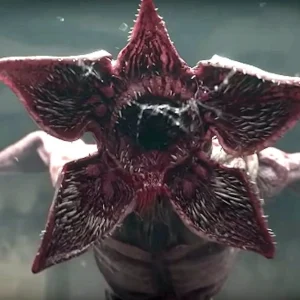
When you up the scale, the horror diminishes, which is what Stranger Things started as. You were way more scared of a single demogorgon than a giant Vecna-Spider. Godzilla is not as scary as Jason.
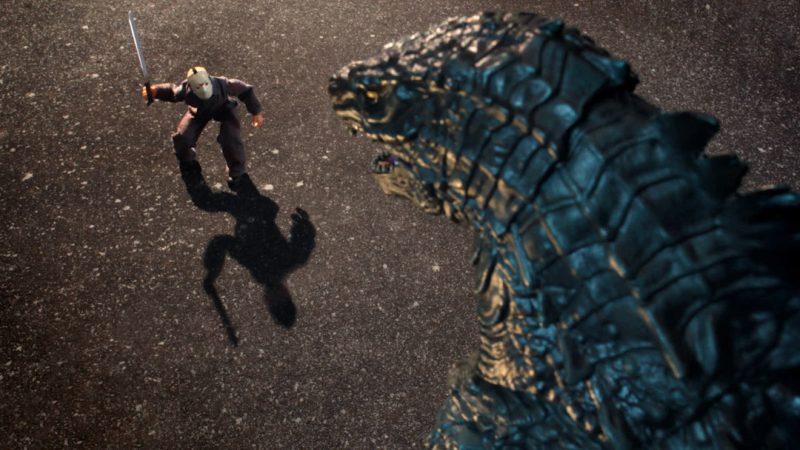
But that’s also not very cinematic. Not after A) gaining so many allies you outnumber the demogorgon twenty-to-one B) knowing exactly how to deal with one. No one remembers the ending of Halloween or Nightmare on Elm Street.
In Buffy the Vampire Slayer Season 7, everyone makes a big deal about the Turok-Han (a pureblood vampire). They spend an entire episode fighting just one and barely survive it. But in the final episode, they battle an army of them with no casualties.
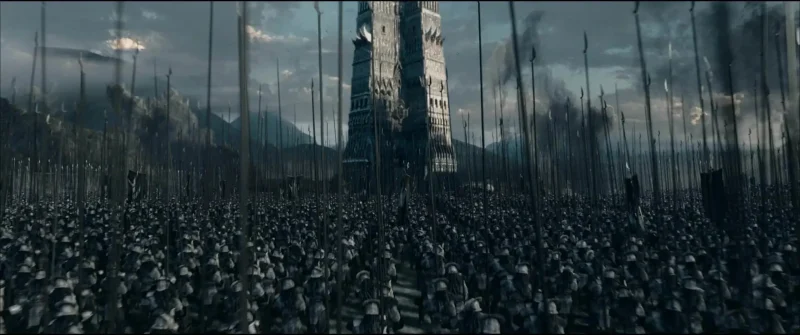
In Lord of the Rings: The Fellowship of the Rings, nine people narrowly escape a single Uruk-Hai. It’s still going after getting stabbed in the thigh, an arm lopped off, and a sword to the gut. But Aragorn didn’t stab him right, I guess, so the Uruk-Hai pulls himself further onto the sword, just to snarl in Aragorn’s face before he’s decapitated. But in The Two Towers, they face tens of thousands of Uruk-Hai who all go down in a single hit.
2) Endings are inevitable. They lack surprise if your story’s long. And the more popular something is, the more people you have to satisfy. It’s like a presidential election. Some people are going to hate it no matter what you do. It has to be not too short, not too long, and resolves all the inner and outer conflicts.
And on top of all that, the audience expects you to be clever too. And if you fail at that, it will 100% be a disaster (a la Lost). Like a figure skater who tries to nail a super hard trick at the last minute. Better to stick the landing and get the points than try something risky and lose them all. The ending is not the place to spring surprises. Endings answer questions; they don’t bring up new ones.
And the Stranger Things ending was satisfying. In a good series finale, you need a chance to say goodbye to the characters. If you deprive the audience of that, you will flunk. That’s why the endings of Friends, Cheers, and M*A*S*H–the most highly rated TV episode of all time–worked. But Stranger Things isn’t a sitcom, so it had to be striking, yet predictable.
Is it so bad they all got what they wanted? When you make a large story, arcs are going to eventually tumble down into an expected position, like the ball in Minority Report. It has to fit what has gone before and feel right for the character. It wouldn’t make sense for Mike to suddenly fall in love with Will when he’s never demonstrated any gay tendencies throughout the series.
The whole series was about friendship. That’s clear from the series’ motif words: “friends don’t lie”. The young adults pledge to stay friends even though they’re taking their individual paths. The Party concludes their “campaign” (read: high school career), but another generation takes their place at the table, promising to carry the banner. It’s the circle of life and it moves us all.
And most of all don’t forget–Stranger Things is a dedication to the eighties. To movies like The Goonies, E.T., X-Men, Monster Squad, Ghostbusters, Stand by Me, Poltergeist, The Breakfast Club. These all had happy endings and were about found families working together to get those endings.
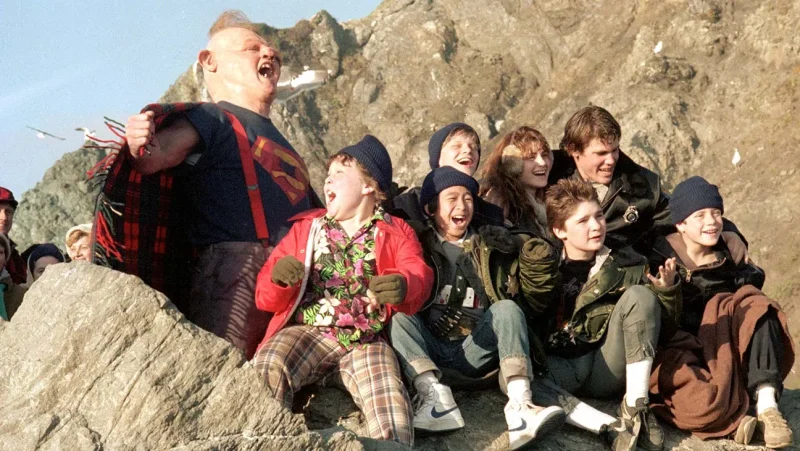
A story is about the journey, not the destination. It’s especially true in the case of ten-year epics. Stranger Things is about the friends we made along the way. Don’t judge a series by its ending. Remember the ups and downs. The Hopper Dance. Robin’s whiteboard. The mystery of “MADMAX”. Eddie and Chrissy. Steve’s transition from douchebag to “friend of all children” (and his hair care routine). Max and Eleven shopping at the mall. Will the Wise turns into Will the Warlock. Max confronting Billy and all the trauma he caused. The Snow Ball. The iconic van flip. Hopper seeing his daughter while he’s resuscitating Will. Master of Puppets on top of the trailer. The life and death of Alexei. Justice for Barb. “Bitchin'”. Joyce Byers never quite returning from cloud-cuckooland.
These are what made Stranger Things worth watching. And what will keep it rewatchable (unlike Game of Thrones). These are the moments hidden in the lines, written on the pages of a never-ending stooooorryyyyyyy.