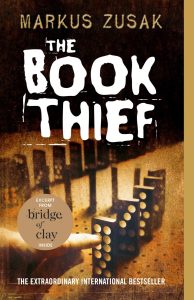
The Book Thief by Markus Zusak
(re-read)
I know this is sacrilege for an author, but watch the movie first.
When I first tried to read this, I didn’t “get it”. The narrator is erratic, seems to have synthesia, lives in multiple times, and is always flashforwarding. This makes the book difficult to read if you don’t know the plot going in. I couldn’t grasp the basic storyline when I was being told so-and-so is going to die later on. It’s like when you pass something around in class. You got one person looking at the object, the person in the desk next to you is leaning over to look at it, and the guy behind you is anticipating receiving it. And none of these people are paying attention to the teacher.
Then recently, I saw the movie with my family. And with a coherent narrative that didn’t jump all over the place, it finally made sense. (Plus it was a good movie.) Now that I understood what was going on, I went back to the novel and got a lot more out of it this time. Now I could pay attention to Death’s little eccentricities because I didn’t have to worry about keeping track of all the characters. And this lets you appreciate both better.
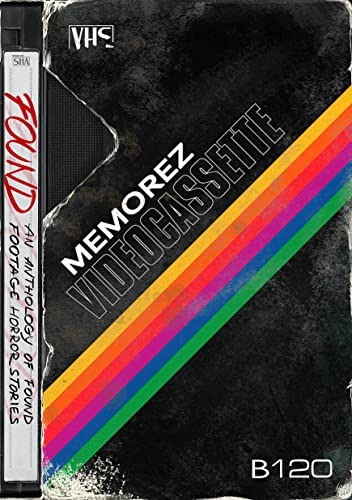
Found: An Anthology of Found Footage Horror Stories edited by Andrew Cull and Gabino Iglesias
So the written word doesn’t lend itself well to “found footage” which, by implication, takes place in a visual medium. For one thing, text has already appropriated the conceit of “this really happened, isn’t it scary” through epistolaries, stories told through documents, and stories that the author heard from a friend of a friend, like The Time Machine or Heart of Darkness. Not that these ever made much sense (Jonathan Harker: “I just saw my client crawling down the side of the castle he owns, and then I three hot vampire chicks were by my bed about to eat me. I totally need to escape, but first, I’ll write a letter about it!”)
Nonetheless, the selections in here do a good job at pulling it off. Some are in “document form” like I said before, because that’s the equivalent of found footage for books. But some are just narrative, and they’re surprisingly great. Some are scary, some are funny. Most are stories about the footage that was found, not a “you’re really there” style. But they’re all entertaining. It reminded me a lot of the V/H/S series.
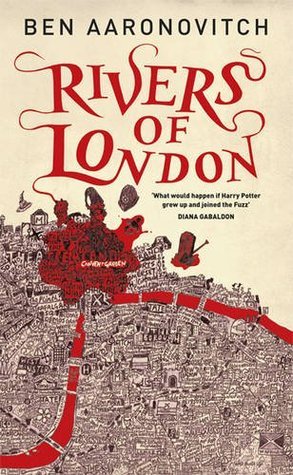
Rivers of London by Ben Aaronovitch
(unfinished)
I just went to England, so I was delighted that I could recognize some of the places he was talking about. That’s probably why I got as far in the book as I did.
The back cover copy calls it Harry Potter as a London cop. But it’s not like that because at least Harry Potter had conflicts. Things like choosing between what is right and what is easy, living up to the title of the Chosen One, and being thrust into a world he doesn’t know. This main character, however, is missing something to overcome. He’s not active, he’s reactive. He doesn’t have a fatal flaw or a misbelief or a problem. He acts like Pete Davidson’s “Chad“.

There’s no overarching fight that ties it all together. I stopped when I realized it was all a set of external conflicts. And the main character didn’t seem to care whether he solved the case or not, didn’t care if he learned magic or not. Plus he was starting to get gross about ogling women’s bodies.
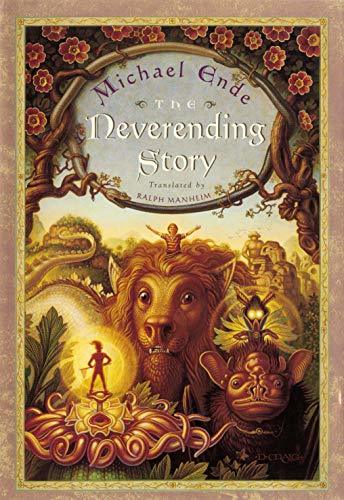
The Neverending Story by Michael Ende (translated by Ralph Manheim)
As the tale goes, only the movie is only about the first half of this book. What happened to the other half? What happens in it? What lore and mythology am I missing out on? (Because I certainly won’t get it from the sequels.)
The first half plays pretty close to the movie. Even includes the frame of Bastian stealing the book and reading it (so you’re reading about a boy reading?). It’s just a nice fantasy fantasy novel with doctor centaurs and ten-year-old purple buffalo hunters (the buffalo are purple, not the hunters). Atreyu travels through Fantasia (called Fantastica here) looking for a solution to the Nothing, loses Artax, questions Morla, meets gnomes, oracles, losing the auryn, and so on. But at 45% it starts to deviate.
It’s not the Nothing that gets them. Atreyu drops out and the Childlike Empress takes over the narrative. She goes off looking for an old man who’s rumored to have a way out, but it might be a nuclear option. It turns out that old man is writing The Neverending Story–the same book that Bastian is reading and you are too, sort of. He’s writing down everything she says as it happens. And when the Childlike Empress asks him to read her the book, he does. And when it comes to the end, he has to start over because he’s come to the part where he was reading about himself reading the book. Then he gets to the end again and has to read about him reading the book about him reading the book about him reading the book. And so on for infinity. That’s when Bastian gives the empress a name and gets sucked in.
Now he just exists in the book world. And there’s not really a plot after that. There are a few elements of the second movie. Atreyu and Falcor do come back. And there is a Queen Xayide and her hollow soldiers (but no Nimbly). She does do some light manipulation of Bastian but not to any real goal. And using Auryn does deplete his memories. But that’s about it.
It’s just a series of bits, like The Phantom Tollbooth or Alice in Wonderland. But toxically masculine. For example, he wishes for a forest and that forest contains a big-ass tiger-lion, but he befriends it. And he goes to different stations, like the land of the old people and the house of the kindly grandmother and so on. And he has a character throughline of becoming like a jerk because now he’s got all this power. But he doesn’t really have a quest or a purpose. Now I see why nothing’s ever been done with the second half–it’s quite boring and Bastian goes from sympathetic to unlikable.
The Best Short Stories 2022: The O. Henry Prize Winners edited by Valeria Luiselli
One thing I’ve noticed from reading a few of these collections–a lot of stories involve the pandemic. And since that would date a story, it implies that these are meant to be read and thrown away, like a candy bar and its wrapper. Also, most of them take place at a 30,000 foot scope. There is no intimacy, no getting familiar with a character.
There are some decent stories in here. They’re not all about cutesy romance or morally ambiguous like escaping an abusive husband or Spanish witch-women. One is about a teacher-student affair. Another is about a parental couple who have to start webcamming to make ends meet (again, the pandemic). It’s the best collection that I’ve read so far, but that’s not saying much.
You by Austin Grossman
Basic premise: Author tries to make debugging software into thrilling story. The final product is about how you’d expect.
It starts with some long passages about what video games are and what they mean to the main character. Not a strong start and the essays don’t stop. Sometimes it treats us like we don’t know anything about the video game industry or software development. Other times, it’s insightful. Knowing your audience is a hard line to tightrope across.
The Grossmans (Austin and Lev) have a tendency to drift away from the story. One review I read called it “too much nostalgia and not enough substance”. I think there’s plenty of substance, but no heart. I said the same thing about the other book of his I read: Soon I Will Be Invincible. It makes me wonder if Grossman is a robot.
I get the sense that this is all based on the author’s experience in game design, as Austin is one of the talents behind Dishonored and System Shock. The problem is I saw the Psychonauts 2 documentary. I’ve read Blood, Sweat, and Pixels and Masters of Doom. I know that most people in game design (except maybe QA) are delighted to be in the industry. The only thing that gets their goat is poor management. But in this book, the studio’s already lost all its creative talent and leadership. So where is the conflict? The drama? The thread?
In the story, the big problem is that the black box has a bug in it. And even though it only seems to happen one in a million times, they need to fix it before ship date (because no game has EVER shipped with a game-breaking bug). And since the original programmer is dead and the code cannot be accessed, they have to get creative with replicating it by applying the black box to other games in their library. The game series itself is on its last legs, having been tossed from publisher to publisher, and it’s suffered from brand dilution.
The main character, who has no software development experience, gets a job at a development studio known for a certain cult-following IP, like Final Fantasy or Ultima. But we know nothing of his past, nothing of his desires or emotions or a misbelief. Sometimes he “talks” the video game characters. Like he has this deep connection to them, but he doesn’t. I can’t tell if this is his way of getting through his own shit or he’s having a psychotic breakdown. And the story never answers that anyway.
And in particular, there’s a problem with a lack of stakes. Of course, there’s the idea that, unless the game succeeds, the studio will close or be sold off. But why is it personal to the main character? Nothing’s going to happen to him if it doesn’t ship on time. He has nothing invested and no significant past with the franchise’s creators. He doesn’t even make connections with the other people at his office, but they act like entitled douchebags anyway. There’s really no one to root for.
The other thing is that the video game they’re creating makes no sense. Its birth is a result of a John Romero/John Carmack-like friendship. But being in 1984, this game was limited to ASCII characters and floppy discs. But it apparently it had such robust source code that every other game they make after it uses that code like a black box, because it runs the economy, the NPC personalities, item spawning, and everything else behind the graphics. Which would be like making Doom from Dungeons of Kroz. It also means they invented procedural generation and AI in the eighties, yet their studio is still struggling. Plus no other game in this time has embraced that. They still possess the chunky gameplay of 1997 (they even mention Quake II by name, so we know this isn’t an alternate universe). That level of computing power just wasn’t possible back in 1984, so I cannot suspend my disbelief.
Another dissonant aspect is that, in one of their series, the first game is a Tactics-style space opera. And when it proves popular enough, they make a sequel… that is a first person shooter. Huh? No way would anyone make a business decision that stupid, to alienate your fanbase by making the next game a totally different genre and playstyle, so far away from the original that it’s unrecognizable.
If you’re looking for a book about video games, read Tomorrow and Tomorrow and Tomorrow. It also has it’s problems with fantastically unbelievable gameplay in a time that wouldn’t have allowed it, but at least there a character relationships and drama.