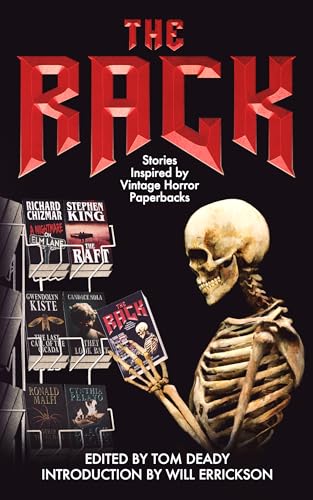
The Rack: Stories Inspired By Vintage Horror Paperbacks edited by Tom Deady
This is a collection of short stories all based around “monsters”, kind of. It says it exemplifies those books in the paperback rack in the grocery store or bookstore that had scary violent covers meant to inflame the senses (as featured in Paperbacks from Hell) but those are mostly monsters. Some are serious, some are ridiculous. You got giant spiders, werewolves, haunted houses, demon bears, lots of dolls, clowns. You know, the standard, very eighties. And it had some good authors like Max Booth III, Richard Chizmar, and an old Stephen King story that was dramatized in Creepshow 2 (“The Raft”).
These are all tangible monsters. Nothing psychological or intellectual. There’s no subtlety here, but that’s a compliment. I love book covers and movie posters and VHS boxes. Those are the best art IMHO–they tell a story, they entice you to partake of the media, they’re bright and contrasty–much like these stories. These are the like Scary Stories to Tell in the Dark for adults.
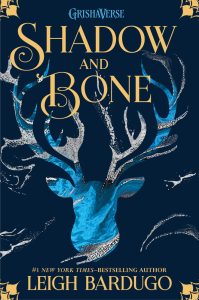
Shadow and Bone by Leigh Bardugo
(unfinished)
I got 50% through when I realized two things. One, I had already seen the Netflix show (which is what interested me in the book in the first place) and the show closely follows the plot. Two, I got sick of Alina always whining about her life. It’s essentially another “girl doesn’t appreciate her fancy new life”. The Hunger Games did it, The Selection did it, How to Ditch Your Fairy, The Death of Mrs. Westaway, The Unbecoming of Mara Dyer, The Inheritance Games, and so on.
“Oh, I was a poor orphan and now I’m the chosen one and I’ve got magic. What ever will I do about the people paying attention to me now and making me beautiful and giving me dresses and powerful men flirting with me. Oh, I have to go to a ball–is anyone going to like me? I’m not prepared for the politics of palace life. I’m surrounded by people who actually expect something out of me now.”
Really not a fan of that genre–the whiny entitled female protagonist. Girls who are so naive and waify, like in Twilight. They have no fatal flaw, except for being a delicate little flower. They “care too much”. It’s just a thin mask for a Mary Sue. Nothing she does is wrong, she’s only a victim of inexperience.
It’s like they have a medical condition of “too much empathy”. That’s fine for a Disney princess in a family movie. Not in a dystopian world where everything is dangerous and the government doesn’t care if you live or die. If there’s a streak of hell through your country, you don’t have the opportunity to be empathetic. Nobody’s emotional in Terminator 2.
Why can’t we have a fantasy heroine who goes from rags-to-riches and has an attitude of curiosity and gratitude instead of “waah, I just want to go back to where they treated me like dirt so I can go back to normal.” Give me a break.
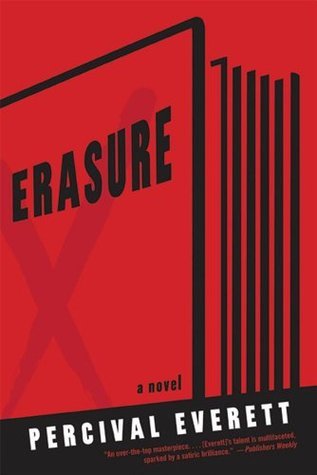
Erasure by Percival Everett
I saw “American Fiction” and really liked it so I wanted to read the book. And the book is very very different from the movie. And that’s not a bad thing this time. It’s much more literary fiction.
For example, in the movie, when he writes the “urban African-American” novel out of spite, it’s a three-minute scene. All it shows you is the introduction and that’s all you need to understand it. But in the book, it gives you the entire text of the novel. Eight chapters. I came here to read a literary novel, not a trashy “urban” African-American novel that uses Ebonics narratively. And I know that’s the point–that white people eat that kind of stuff up because they think it’s “real” even though it’s wrong and stupid. Also, this takes up about a quarter of the novel’s length. And the whole thing’s only 70,000 words.
Most of the content is the same as the movie. It’s still more about the mother having dementia than the guy who sells out his art for fame. As you’d expect, the endings are different. This one just ends at the book award ceremony and doesn’t break the fourth wall.
But you also get more of Monk’s personality, why he does the things he does. He finds solace in his intellect, but also uses it to feel superior to what everyone thinks black lives are. But then he also doesn’t consider his own disconnection from the “typical African-American experience” (whatever that means). He alienates himself from his own race because of it. He’s fighting against the only black voices being like “Precious” and “Boyz N the Hood”, which is how white people see them. And that’s nice, to get that detail. But I would say it’s entirely allowable to not read the book if you’ve seen the movie.
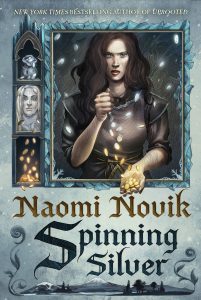
Spinning Silver by Naomi Novik
This story is a mishmash of a few fairy tales, the most prevalent is “Rumpelstiltskin”. Except we’re dealing with the fae now. And not the good kind of fae. It’s the ones that steal your babies if you don’t leave milk out for them. The background is very Slavic, very rooted in eastern European folk tales, like in The Book of Goodnight Stories.
I do like the main protagonist. She’s a moneylender and had to take over for her soft-hearted dad or they’d starve. The characters are the people she meets as a result of earning her wealth, instead of someone else giving it to her. She works hard and has to be a little heartless to get the job done.
The writing style does not have much dialogue. The pacing is good, but only up to the first act. Then it’s like the author said “Oh crap, I don’t have enough plot to fill out the rest of this book. I better start thinking of filler.” The book really slows down at the two-thirds point. The narrative switches POVs a lot. After the fifty percent mark, it’s still introducing new perspectives, like the villain, and the handmaid–people are barely tertiary characters. And you’re like “why do I need to know this person’s thoughts and feelings?”
Good ending though. But dang it’s long.
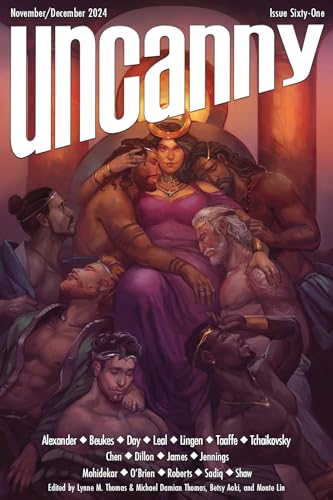
Uncanny Magazine Issue 61: November/December 2024 edited by Lynne M. Thomas and Michael Damian Thomas
I decided, for one of the last short story collections, I’d go back to the Uncanny Magazine well. Adrian Tchaikovsky is the star of this one. He wrote “Children of Time” which I didn’t finish (I guess it’s about a generational ship going to a planet where we evolved spider-people but they don’t know it yet?). Anyway.
Here’s the thing I’ve learned. A lot of people complain about the lack of diversity in the bestseller lists–they’re all white straight people writing white straight women books. But if you’re not straight, not white, not American, short stories are alive and well for you. Plenty of diverse cultures, ethnicities, and sexual preferences in there. The problem is they don’t appeal to me at all, a white straight male. These stories are all rooted in a culture and mythology I know nothing about and can’t connect to.
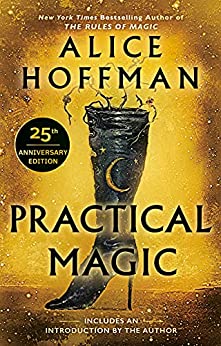
Practical Magic by Alice Hoffman
I had no idea this was a book first, so yes I most definitely wanted to see what changed. Found it on a list of fantasies that aren’t about epic LOTR battles. The text is mostly narrative. Not much dialogue. But I enjoyed hearing the story and seeing the gaps from the movie filling in. There’s some conflict, troubled relationships, ethos. But the lack of dialogue gets tedious after a while. And it starts to get sludgy after sixty percent because it’s lacking a real threat. To be honest, the movie was better.
It mostly follows the same plot. The biggest difference is Nicole Kidman’s character–she’s portrayed more like trailer trash than spurned Aphrodite. The story starts to deviate at around the halfway mark and I won’t spoil anything, but the effect is that the threat/stakes are much lower and less interesting/intense than in the movie. The book is closer to a cozy romance than a dramatic story.
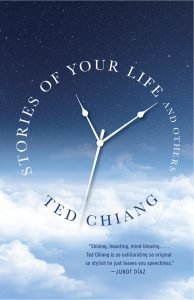
Stories of Your Life and Others by Ted Chiang
I figured I had time to read maybe one more short story collection before the end of the year, so I tried to find something universally liked. I always wanted to read the story that Arrival was based on–it seemed to be a big deal when that movie came out. Most times, in a short story anthology containing a lot of different authors, many of them don’t make sense (at least not to me). They’re abstract and hard to conceive (like Piranesi). I didn’t skip any, but there are definitely good ones and bad ones (or at least ones that don’t work). The first story was really good. The “Arrival” story, I imagine I wouldn’t have understood it unless I’d seen the movie first (and I think the movie is better–more dramatic).
Many were light on the A-to-B-to-C story. A beginning, middle, and end, or characterized people. They’re more focused on world-building and explanation of the scientific premise behind the story, which is par for the course when it comes to science fiction. If you’re going to write about a robot, you have to explain how robots work. Lots of jargon and big words and heady concepts, you know? But that’s what science fiction does–challenge you on what could be. That language and brain development are linked, so if you have a linear language you perceive time linearly. If you could make golems, what happens when the golem starts making golems? It reminds me of Isaac Asimov type stuff, so yes I recommend this.