I didn’t have to use such a click-baity headline, but I have an AI plugin that tells me how “engaging” my post title is and it always falls below 50%. And even this one it doesn’t like–it gives me 48/100.
I hate fake-out endings. Only now did I realize just how much I hated them. I watched Cell with John Cusack and Samuel L. Jackson, a bad movie to be sure, but I’d read the book a long time ago so nothing was spoiled. Except the ending deviates quite a bit, even though it was written by the same guy (Stephen King). I can totally understand why an ending might be changed–it might not be cinematic enough, or leaves too many loose ends. And who better to make that change than the original author? But oh, Kingy, how far have you sunk.
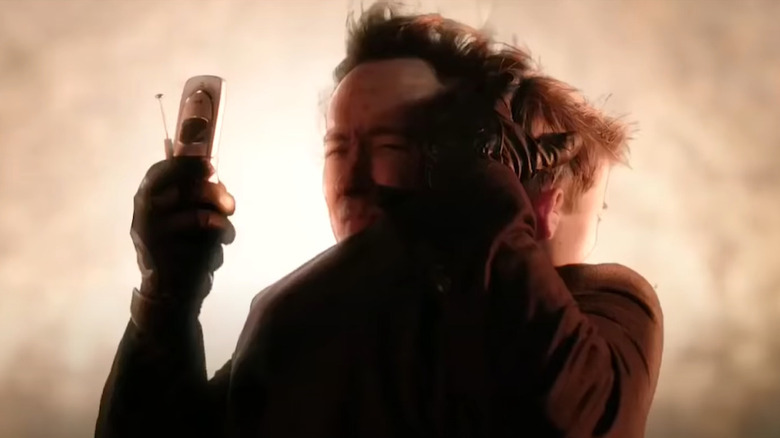
Here’s what happens. John Cusack’s son has been turned into a phone zombie. All the zombies are circling this cell phone tower. John Cusack finds his zombie son and hugs him as he blows up the C4-laden ice cream truck he drove to get here. The flames consume them. But at least they did not die in vain, having killed the zombies and never becoming zombies themselves.
But then the shot fades to Cusack and his son walking through the woods, hand in hand, on their way to join their friends in Canada. Hooray, they survived. How did they survive after being so close to the explosion? Don’t know. Doesn’t matter. Be happy that they lived.
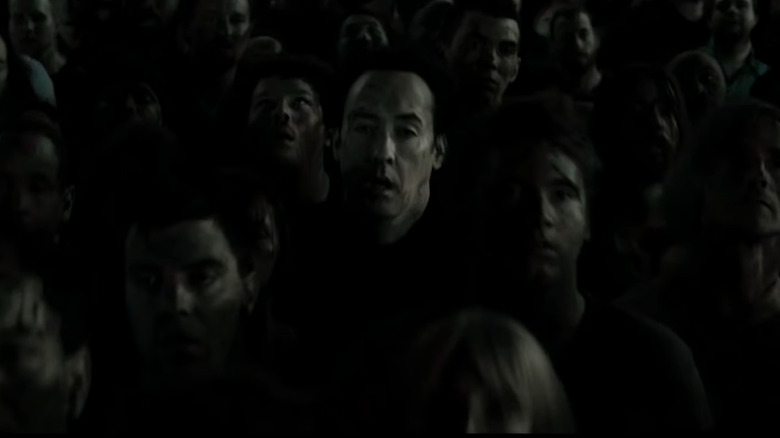
But nope! It was all a dream or an illusion or a way of coping because fuck that noise–Cusack has been turned into one of the zombies. He’ll forever be circling around the tower, his head flopping around like a bird, looking like dead Elon Musk.
How tasteless. How cliché. How unsatisfying. There’s nothing I hate worse than a “fooled you! I lied!” bullshit ending. Especially a bullshit ending I can smell a mile away. They are literally ten feet from the explosion and you’re trying to convince me they survived? No burn marks or scars or consequences? Did King think he was clever by doing a triple-fakeout? It’s the bullshittiest bullshit that ever bullshitted. Come on, King. You’re better than that. And you don’t even have the drugs as an excuse anymore.
What is with so many movies, especially horror movies, having fake-out endings just to get a cheap scare. It’s the tawdry French whore of writing. It’s the cheapest of the cheap. It’s ineffective. It’s cliché. And it NEVER ends with a satisfying reader experience. Never. And authors should know that.
Think about it. It’s the “all just a dream” ending with a dash of “cruel twist”. Has anyone ever liked an ending like that? Has anyone? Ever? Wizard of Oz is the only one I can think of, and even then, it’s a little deus ex machina. Horror movies love to do this. The Descent did this. Smile did this. “Playtest” in Black Mirror did this. 1408 did this–another Stephen King movie with John Cusack and Samuel L. Jackson! Guy rips himself off!
I don’t know where this trope first appeared, but I feel like “An Occurrence at Owl Creek Bridge” legitimized it. It was written by Ambrose Bierce and everyone’s like “ooh, early American literature, so scholarly.” But it was garbage then and it’s garbage now. The story doesn’t even make sense–you can’t see an entire lifetime in a second. This isn’t “The Inner Light“.
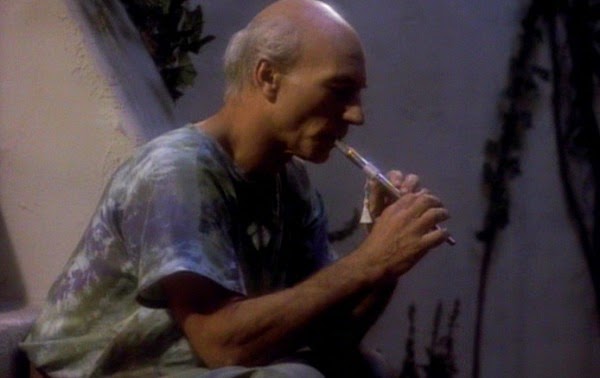
When I was in college, still splashing in fan fiction, I learned that the best thing you can do as a writer is provide a Satisfying Reader Experience. It’s cheesy jargon, sounds like it’s out of a nineties infomercial, but it’s true. Gotta make the reader feel like it was worth their time. Because if they don’t, they’ll never come back. And the fakeout ending is the biggest lemon of an experience you’ll ever get out of a book. The author says “it was all meaningless! Nothing mattered to anyone and no one learned anything because it wasn’t real.”
Too many writers/storytellers are using it as a way to wrap up everything. They create bigger and bigger stakes because readers/viewers won’t be interested otherwise. But then they can’t think of a satisfying way to defeat the bad guy. They made him too powerful. They made him an obstacle that can’t be overcome. How are we going to get out of this one? Well, you don’t have to if it was never there to begin with.
Writers — do not use this trope. EVER. Not for the middle, not for the end, not for the plot itself. It is the equivalent of empty calories, like adding sawdust filler to your meal–it only takes up space. It adds no value because no one ever changes because of it. There are no consequences for a dream (unless it’s “Nightmare on Elm Street” but that’s an exception).