
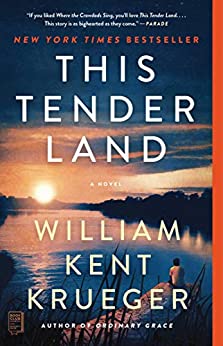
This Tender Land by William Kent Krueger
So this book is like a combination of The Grapes of Wrath and The Odyssey, but in Minnesota 1932. This tripped me up because I kept looking for one-to-one parallels, which distracts from the reading experience. The main character is named “Odie” and they do encounter a man with one eye, but these kids’ journey doesn’t mirror Odysseus’s journey like “Epic: The Musical“, but I think it’s just invoking the idea of a long journey with constant obstacles. No one changes from a good warrior and leader into a war-obsessed psychopath.
There are clear delineations between the “good guys” and “bad guys” in this novel. It starts with two orphaned brothers being raised in an Indian reform school by Mrs. Tweedy and her husband.
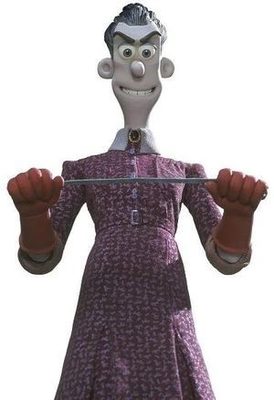
I mean, that’s how I pictured them, because that’s how the book portrays them. She always wears black and punishes kids by sending them into a closet with rats, like Miss Trunchbull. And she’s pursuing the kids throughout the novel, always on their heels, like Miss Finch from Follow That Bird. No muddy narratives here, even though it’s historical fiction.
So as I read, I kept asking myself, “Is this cheesy or is this legitimate dramatic emotion?” I still don’t know the answer. But I can say that I liked it. The pacing is erratic, but it’s full of memorable, impactful events and characters. Getting the show on the road takes some doing, so you get a fair chunk of abusive boarding school, complete with a token pedophile. Then the ending rushes at you. It’s like the author was writing and writing, then looked at the word count and thought “Oh crap, I’ve got to wrap it up or it’ll be too long.”
Because it’s one of those stories that could go on forever because it’s just a journey. The story is the places they stop at along the way. They’re trying to get to St. Louis, but their only transportation is a canoe. Hijinx ensue at each place they stop at, and the kids learn about love and trauma and social class and coming of age. And if you can settle that the characters are black-and-white, you will enjoy this book.
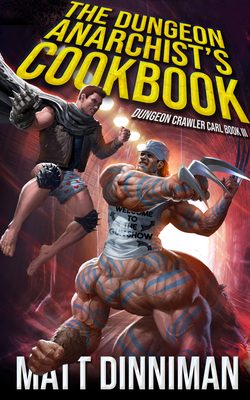
The Dungeon Anarchist’s Cookbook (Dungeon Crawler Carl #3) by Matt Dinniman
Episode three in the big Carl saga, and they seem to get longer as they go. This one was harder to stick with than the others. We’re past the point of introducing the new world. The second gave a good sequel, taking the ideas of the first and showing what happens when the engine really gets going. But the third is more of the same/similar.
I didn’t like the setting. This level is a big, complicated railroad system with stops and stations and numbered routes. It’s hard to follow, but there’s even a disclaimer in the beginning that says, “this world has lots of complex routes, but don’t pay attention to that, it doesn’t matter to the story.” That’s an innovative way to stave off bad reviews, but I feel like if you had to make the statement in the first place, you screwed up six or seven steps earlier. I had a hard time picturing where things were, and there isn’t much distinction. Everything is a train, train station, or train-adjacent, with fewer characters to interact with besides the other dungeon crawlers.
But other than that, the characters and plot are fine. Again, it’s mostly dungeon crawling, figuring out strategy using video game logic, like portals and sandboxes and unfair monsters. You won’t find anything new about Carl’s background or character–it’s extremely forward-moving. But you knew that from the first.
I also felt like Dinniman’s writing quality went down. I noticed lots of sentences starting with the same word, which is a pet peeve of mine. Maybe this book was rushed? But I’m optimistic about book 4, which sounds more straightforward.
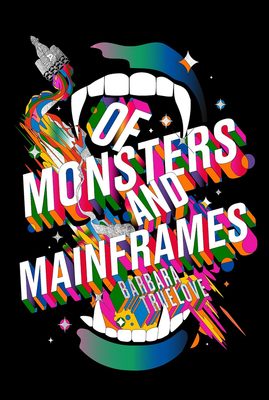
Of Monsters and Mainframes by Barbara Truelove
I couldn’t say no to this concept. An AI on a generational ship wakes up and all the passengers are dead. Because of Dracula. Of course, I’ve got to find out how that problem gets solved. And the best part is it’s not just Dracula. All the monsters are here–Frankenstein, the Wolf Man, the Mummy, and even some Cthulhu cultists.
My two gripes are that the narrative is episodic. There’s a vignette about Dracula. Then the spaceship makes another trip and there’s a vignette about a Wolf Man. Then there’s another trip, and this time it’s a set piece involving Cthulhu. The narrative is linked but feels divided. It’s like an anthology, but not really. And the POV switches around a lot. It’s not all about the AI’s character evolution.
Speaking of which, that’s my second gripe. The AI acts like a trite person. Too chirpy. In fact, there are two AI characters, the other being the ship’s doctor, who acts like The Doctor on Star Trek: Voyager. And I don’t know how to characterize an artificial being, especially given today’s AI climate. It’s not a person, but it’s not a brain in a jar. It would be easier to sympathize with if it was, but it’s not. For some reason, it feels sad because the other space stations make fun of it by adding extra zeroes onto its designation number. Huh?
But then I decided to accept that the AI’s going to have feelings and desires somehow in this book. And it was worth it because the rest of the story is worth sticking around for. We’ve got cool characters kicking monster butts, solving issues, and getting along with each other. Other books, the characters just bicker with each other or act coldly, but this was closer to “Long Way to a Small Angry Planet“. And, of course, you can’t beat space Dracula.
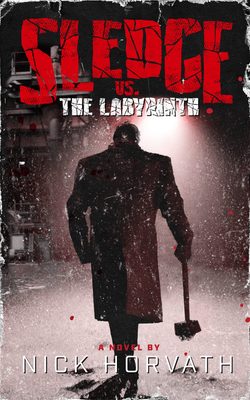
Sledge vs. the Labyrinth (Sledge #1) by Nick Horvath
I went to high school with Nick Horvath. He was in my graduating class. Among 450 people, he was essentially the biggest celebrity superstar. All high school classes have one. Thanks to his tall stature, his claim to fame was basketball. Their team won the championship that year. His coach papered a wall with all his college solicitation letters. Talk of him going professional was the hottest topic. The school paper had an article about him every other edition. Not knowing about him was like not knowing about the Kardashians. I didn’t really run in his circles (did I run in anyone’s circles?), but he was a good guy. And if you know me, you know how extraordinary it is for me to allocate praise to anyone in my high school experience. But post-graduation, all I heard about him was an occasional rumor. He went on to Duke University. I think he played professional basketball in Europe after that, but that was all I knew.
Until now.
Suffice to say, I had no idea he was a writer. He was in NHS and other extracurriculars, but he didn’t exhibit any affinity toward literature as I saw him. He wasn’t in any of the creative writing or Journalism or Honors English classes I took. His trajectory always looked to be “sports jock” or in that orbit. He’s now a Physics teacher in New Zealand. And this book he wrote–a book series actually–looks like quite a book, from the cover. A shadowed killer with a sledgehammer and a long coat stalks a winter plain. I’ve watched/played so many movies and video games with this kind of cover (and still do). Like Hatchet, but snowier. Didn’t think the clean-cut basketball kid had a penchant for slasher violence.
But I’ve been burned before by books from non-book writers, like Brad Jones and James Rolfe. People who were fantastic in one creative medium, then thought they could leverage that audience into another. Anyone can write a book… if you don’t care about doing it badly.
I took a peek at the first chapter, just to see what he writes like. But I kept reading. And all of a sudden, I was into it. The writing is actually good! I was delighted. There are no typos. No comma splices. It’s not amateurish. It’s competent.
This is a book aimed at men. It’s about a very large man doing violence to protect those he loves. There’s nothing wrong with that kind of story–men love it. It’s wish fulfillment. My problem is when all the stories like that are cookie-cutter, like Taken, John Wick, Law Abiding Citizen, Sisu, and most anything involving Jason Statham. But this is not cookie-cutter. I mean, it ain’t The Road, but it’s not a James Patterson/Tom Clancy war/spy/grizzled detective novel.
Sledge is a very very large man (think Viking) living in the hinterlands of northern Minnesota, where the state’s sleazy underworld dwells. (Does this state have an underworld? I think there’s just that one house that needs to be painted.) His former flame gets targeted by an underground bounty system on the dark web. Like human trafficking, but you kill the person instead of kidnapping them. When Sledge finds out what’s going on, he finds out the target is actually him. It’s like “Oldboy Goes to Frostbite Falls“.
The biggest flaw is that the plot gets repetitive. Stakes do go up, but linearly and within expectations (e.g., the bounty system has levels and Sledge progresses through each one, almost like LitRPG). There’s lots of action, good dialogue, interesting characters. As most men-aimed works, it’s heavy on plot and light on characterization. Think Commando and Death Wish. The events that happen are more important than its effects on the person. The physical injuries have more screen time than the emotional ones. There isn’t a lot of intrigue, but there is some puzzle-solving. The author applies his chemistry and physics knowledge innovatively (but when it comes to explaining the dark web and cryptography, it’s clear Duke offered no classes on Computer Science, spoken as a person who graduated in Computer Science (which is fine–you can’t major in everything)).
So while I can’t say I really recommend picking this up–it has a very specific audience in mind–I would like to hold it up to call your attention to it. The enthusiasm he has for what he’s writing really bleeds through. It’s worth a look to see if you have an affinity for a gritty high-octane thriller in the written word. Seems the only way to get the right eyes to see it is to make sure everyone sees it.
Also, I keep getting Sledgehammer by Peter Gabriel in my head while reading.


