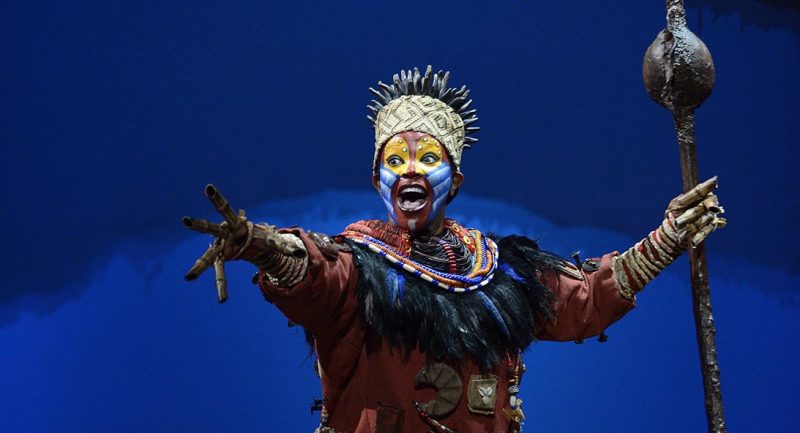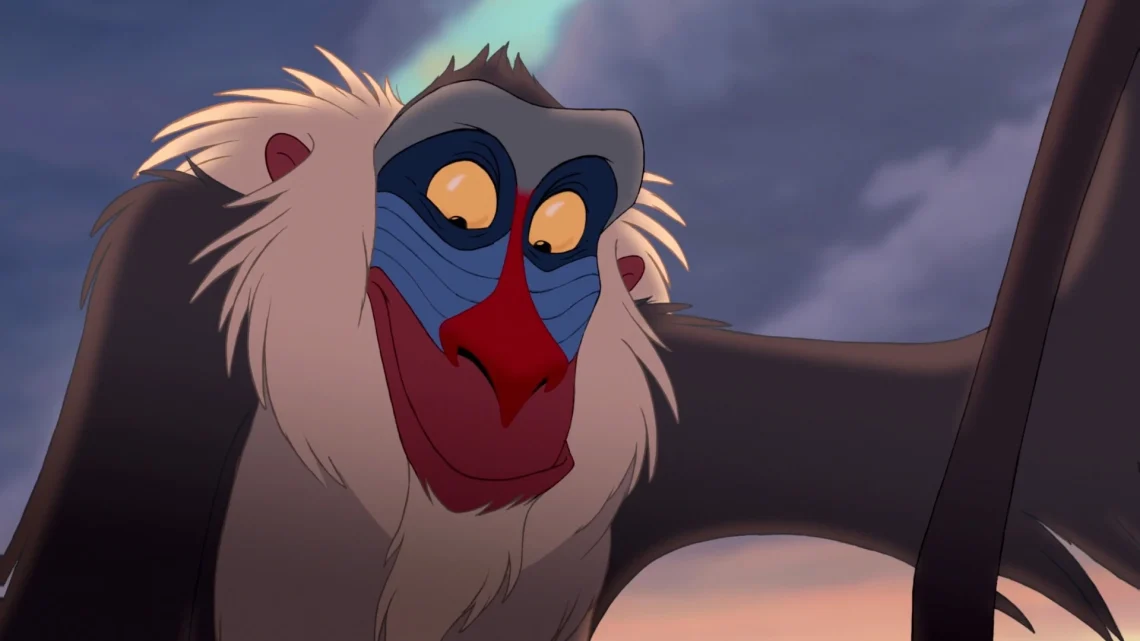
I just watched “The American Society of Magical Negroes“. The movie’s amusing from a storyteller’s point of view, because it’s silly and true (“true” as in it still happens. Even black writers sometimes accidentally add them). But when they’re introducing the concept, someone defines a “magical negro” as a “black supporting character who only exists to help the white protagonist”. Then I thought “Isn’t that like Rafiki from The Lion King?”
Before we check the criteria, let’s talk about “coding”. However, Disney is known for “coding” characters, especially when it comes to villains. Scar, Gaston, Hook, Shere Khan, Jafar, and Ratcliffe are all effeminate “limp-wristed” dandies. Ursula (who is literally based on a drag queen), Madame Medusa, Queen of Hearts are loud masculine lesbians. The reason for this, from a storyteller’s perspective, is that it easily provokes an instinctual fear of “the Other”–characters acting against their gender type–and induces homophobia. That sucks, but that doesn’t have anything to do with Rafiki.

Disney’s not above racial stereotypes either. The Siamese cats from Lady and the Tramp, the crows from Dumbo, The Aristocrats has several, including a black “Louis Armstrong” cat, a Russian cat, an Italian cat, and a definitely racist Chinese cat. This is not a melting pot, this is a Southern racist political cartoon.
But that’s all negative coding–villains and side characters. Simba’s definitely a white guy. He’s voiced by a white guy in both child and adult forms. Scar is British–he has a distinct accent and courtly, elegant traits. Nala is white when she’s an adult, but black when she’s a kid. You can hear it in her sassy voice acting. Theoretically, everyone should be black since it takes place in Africa, but these are animals.

My point is that Rafiki is coded as black. More to the point, he’s African black. He’s the only one who is, despite the setting. More more to the point, he’s an African magic practitioner. I don’t want to say voodoo or witch doctor, but he’s definitely doing something mystical and supernatural and belief-based. For example, he gathers some leaves on the wind, looks at them, and suddenly knows Simba is still alive. I feel comfortable enough calling him magical. And “magical” + “black” + “supporting character” equals…
I mean, his only role in the movie is to help Simba. He appears before and after that, but the only time he has lines with anyone is when he’s persuading Simba to take his place as king. He does this through sage wisdom and mysticism. After that he has nothing else to do. Nothing he does affects the plot or has consequences.
But then I think… uh, well this takes place in Africa and Rafiki is supposed to be an African magic practitioner. He’s the only one who belongs there, who exudes the culture. He’s not the sore thumb, everyone else is.
So does can you be a magical negro if you’re supposed to be there? If everyone else is in your house and you’re the host? He’s magical, yes, but is a “negro”? In the sense that, typically, the “negro” part of it means being African-American, with comes with the baggage of American slavery, helping white folks despite oppression, the soft Southern racism that this character sprang out of. Does Rafiki defy these tropes?