The best writers usually cut their teeth in journalism. Ernest Hemingway, Neil Gaiman, Stephen King, E.B. White, David Steinbeck, Charles Dickens, H.G. Wells, Mark Twain, the list goes on. It’s where they learn to write for an audience and how to be a taker-outer, not a putter-inner (because you need your words to fit on the page next to the car ad). I took Journalism I and II in high school. That was the only way to get on the school newspaper. It wasn’t an after-school activity, and you couldn’t take it until 11th and 12th grade.
If I weren’t a software engineer, if it weren’t such a comfy and lucrative job, I would like to be a wandering journalist. Someone who was a freelancer who would go to where the story is and report. Or, if I were lazy, I could be an editorializer. My fifth-grade teacher said I was going to be the next Norm Coleman (who was a Star Tribune columnist). But there’s a problem–I am super shy.
I HATED interviewing people. I was TERRIBLE at it. Every student was assigned a “beat” and every week you had to go to your beat and find out what was new, what was up. This was to prepare for the upcoming stories, find out what’s new, what’s worth printing, if anything. I DREADED every Tuesday when I would have to contact my beat (who was actually a very nice teacher), because it meant A) deviating from my schedule B) talking to someone I didn’t know well C) getting information about something I wasn’t interested in (which was DECA).
This was before I ever knew the name of the demon Anxiety, let alone how to cast it out. I wonder how many great journalists we’ve lost because they were too nervous to talk to people they didn’t know, to approach strangers, to enter risky situations. Same reason talk therapy doesn’t work for me.

And the rub is that, in this class, every story required three quotes from three different people. Sometimes, especially in my senior year, I would just fake it or write something that didn’t need quotes, like a movie review. I guess there’s a didactic reason for this, but I don’t see a reason why, today, you need quotations to report the news. You don’t need the opinion of the public to note that Mayor Joe Quimby was caught in the motel with his not-wife. And you don’t need quotes for editorials or opinion pieces.
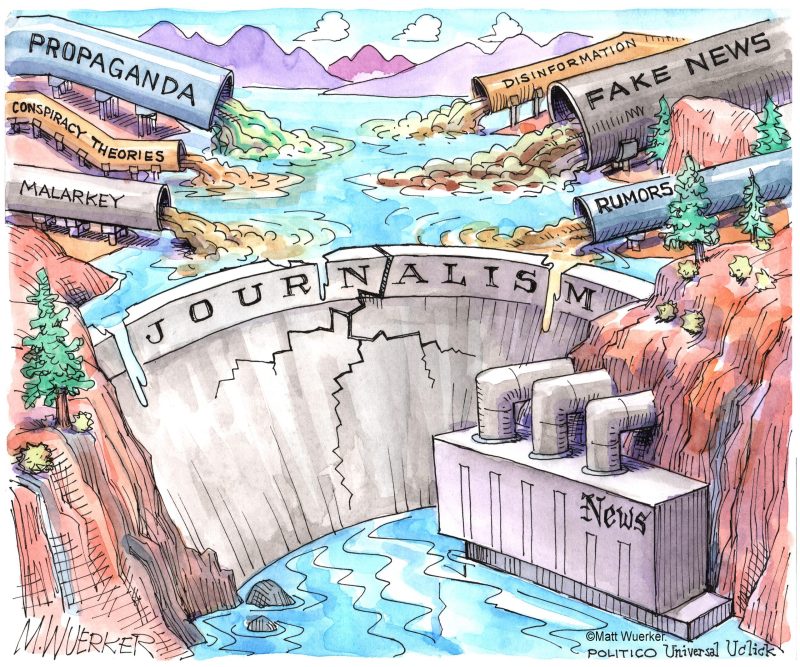
So that’s what turned me off from journalism for a while. Same with becoming a veterinarian or a lawyer–too much talking to people. But now, I’m better. And the reporter bug nibbles at me every once in a while, especially when I see the news industry suffering so much these days. There’s a severe lack of teeth in reporters, a lack of willingness to dive deep and get the truth. There are no Walter Cronkites or Woodward & Bernsteins or David Brinkley.
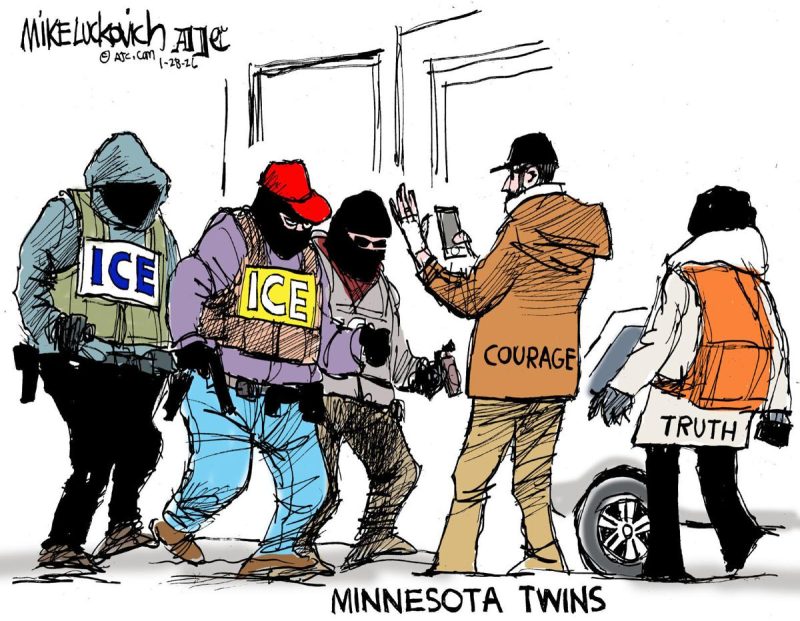
News outlets aren’t interested in exposing crimes, protecting public health, or uncovering lies. They just want whatever gets clicks. And if that means pictures of puppies instead of the latest from Gaza, so be it. And if its not an authoritarian CEO, it’s an authoritarian government. So there are no hard questions. No follow-ups to challenge viewpoints or demand evidence to back up their claims. Otherwise, you’ll get kicked out of the press corps and lose your access. It doesn’t help that the billionaire president is in the same yacht club as the billionaire media moguls. 60 Minutes drops stories because the president tells them to. ABC suspends Jimmy Kimmel for criticizing the president.
This all results in journalism falling to… us. Reports come to us from Instagram and Twitter now by normal citizens who carry cameras and record everything.
This has pros and cons. It means you get your news fast. It comes without bias. The videos of Renee Good’s and Alex Pretti’s deaths were worldwide within minutes. There is no spinning or altering raw video. But it’s not professional. It lacks analysis or deep dives. That’s been relegated to the many talking heads on every cable news channel. Except those are party politicians pushing their own agendas, not impartial experts. In other words, there’s no one to tell us whether it’s raining out. All we’ve got are the people arguing whether it is or not. But this is an attention economy. These are independent people that answer to no one–that’s the consequence of a free press.
And even if we weren’t in “unprecedented” times (if I hear that word used one more time by some mouthpiece on TV, I’m going to puke), current affairs still need a battery boost. We’re so isolated, and we need to know what other people are like, so we can empathize with them. I have no idea what it’s like to live in Georgia. There are plenty of TV shows about it–Love & Hip-Hop: Atlanta, Real Housewives, House of Payne, Will Trent, and an actual show called Atlanta. But that’s all TV drama. What is it really like? What are the people like? What’s the house like? Who do you love? What gets you up in the morning? Tell me about your friends. Humans of New York is an Instagram account like that. And there was a show on Netflix called “You Can’t Ask That” that I recommend.
And moreover, it would be a good jumping point to a literary career. These days, I wonder if I could just start… doing it. Like becoming a reporter with no experience and finding stories. I don’t even know what it’s like to live in Minneapolis, and I’m watching them every day. Must be convenient to go from your house to the war zone.